“You can’t just stop doing something,” Ron explains, his voice grounded in the hard-won wisdom of a man who spent 15 years, one month, and 13 days behind bars. “You leave the room empty. And what happens? You kick a demon out, you leave the room, and he comes back around and brings seven of his friends with him”. For Ron, the journey of transformation hasn’t been about just stopping a past life; it has been about a deliberate, painstaking process of replacement – trading a master that enslaved him for a foundation that finally allows him to stand tall.
Ron grew up in a household built on love and a “realistic world view,” but at 13, he made a choice that would define the next three decades: he traded spiritual guidance for peer pressure. By 18, he had joined the Navy, but soon after, he was introduced to crack cocaine. From age 21 to 40, his life revolved around a single, demanding master.
“I was a slave,” he recalls. Despite his intelligence and multiple attempts at high-end rehab programs like St. Jude’s in New York, Ron remained caught in a cycle of short-term incarcerations and relapses. He describes a period where he was diagnosed as bipolar, only to realize during a three-year stint in prison that he wasn’t mentally ill – he was simply living in a bipolar world created by substance use. But even with that realization, he relapsed within a month of release because his thinking hadn’t changed. He had emptied the room, but he hadn’t filled it with anything new.
The final relapse led to an 18-year sentence. It was during this long stretch that Ron decided the “force actuating his mind” had to change. He dedicated himself to spiritual study, choosing a new path with the Jehovah’s Witnesses, but he soon realized that his decades in the drug world had left another kind of void: a total lack of secular education.
Level’s courses defined things and did it in such a way it didn’t make you feel like a child… it wasn’t humiliating. I wouldn’t even be holding this phone… with any confidence at all if it hadn’t been for a few of your courses.
– Ron, used Level’s education program in prison
“I had foregone any real learning,” Ron says. Though he was a jack of all trades who had worked in plumbing, roofing, and welding, he had never learned to retain knowledge or run a business; he had only been working for the next paycheck to fuel his addiction. Inside the Department of Corrections (DOC), he found that the system itself was ill-equipped to fill this gap. He describes the official re-entry programs as a formality and “the biggest joke of all,” where overwhelmed staff treated people like files rather than humans. To survive and grow, Ron had to become a peer mentor, helping other men in the special administrative unit navigate their own bitter drinks of resentment.
The turning point for Ron’s secular growth came from his “genius” sister, who sent him information about Level. For Ron, Level wasn’t just another workbook; it was a bridge to the modern world he had been away from for 15 years.
He was struck by the tone of the guides. Unlike the often-degrading atmosphere of prison programs, Level’s courses “defined things and did it in such a way it didn’t make you feel like a child… it wasn’t humiliating.” The entrepreneurship and computer science guides gave him the confidence to take a basic computer class before his release. “I wouldn’t even be holding this phone… with any confidence at all if it hadn’t been for a few of your courses,” he admits.
Through the combination of spiritual grounding, peer mentorship, and the mental stimulation of Level, Ron began to set aside the drink of bitterness he had consumed for years. The most profound change was internal. “There were years where I did not make eye contact with the guy in the mirror because I truly was ashamed of him,” Ron says. “Finally, I wasn’t ashamed of myself.”
The education provided a sense of agency. It allowed him to replace his old habits with a new personality and a drive to be a part of society again. By the time he walked out of the gates, he wasn’t just a man who had stopped being an addict; he was a man who had started being an entrepreneur.
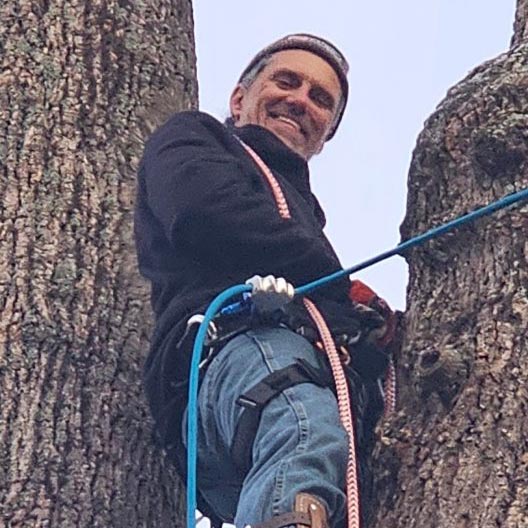
Today, Ron is navigating the complexities of post-release life with a tenacity that surprises even him. He has saved money to buy a car and the necessary equipment to start his own tree work business. He is currently working through the education within itself that is getting an LLC, insurance, and a business license.
When his baby sister recently told him he “gives up too easy” during a struggle with a computer, Ron didn’t retreat into bitterness. Instead, he took it as a challenge. He views his probation officer as a partner rather than an enemy, believing that you “cannot build anything on quicksand.”
For Ron, the future is about persistence and the refusal to let the room stay empty. “What’s your other choice? Fold up, curl up, go back? Not an option,” he says firmly. “We gotta level up.”